
Wijnand Nuijen Illness and Death
On July 25, 1838, he married Cornelia Johanna Schelfhout (1820), a daughter of his teacher Schelfhout.
In that same year, he was found to be seriously ill: he suffered from tuberculosis.
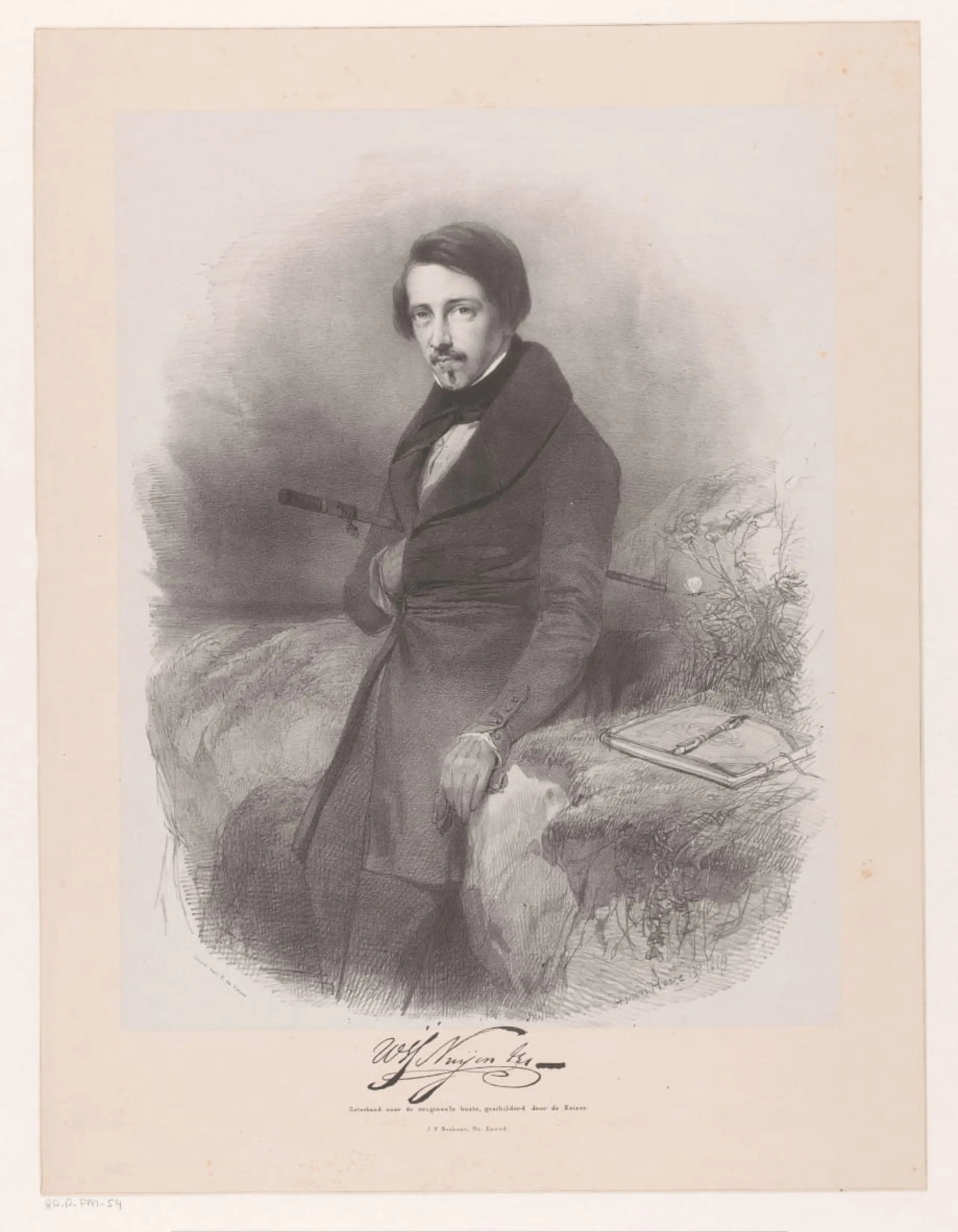
Illness
Despite his illness, he continued to work almost feverishly. Numerous are the large-scale paintings, detailed drawings, and lithographic illustrations that have survived precisely from those years. We must bear in mind, however, that only a part of his total oeuvre can be found. An auction of his studio, which took place a few months after his death, reveals that a number of paintings and sketches have not yet been located.
Nuyen continued to work even during his illness and in the final days of his life. The Belgian publicist Felix Bogaerts, a friend of Nuyen, described his work ethic right to the very end in a ‘Biographical Notice’: despite the severe pain caused by his illness, Wijnand continued to dedicate the few remaining strengths to art; he soon weakened to such an extent that a quarter of an hour of work already exhausted him.
When he felt that he had only a few days left to live, he expressed the wish to have his friend Waldorp, who was in Amsterdam at the time, by his side; the latter hurried to him. The moment of their meeting was moving; these two young artists, always united in brotherly friendship, were now seeing each other for the last time! From that moment on, Waldorp never left his friend's side, and he even worked in his presence to please him.
Upon seeing Waldorp's canvas, Nuyen could not resist the urge to put the finishing touches on a beautiful painting that he had already set aside, hoping to complete it before he died. A final heroic effort by a genius who, even on the edge of the grave, was still working on immortality.
Two days before his death, his father-in-law Schelfhout paid him a visit and found him working on a drawing depicting Death coming to fetch a sick person in an armchair, with a woman in tears behind the sick person. Bogaerts turned Nuyen's deathbed into a moving scene in which the artist's heroism had to be clearly evident, in the same way as in the depictions of the ‘Death of Raphael’ or ‘The Deathbed of Leonardo da Vinci’ that were recurring themes of Romanticism.
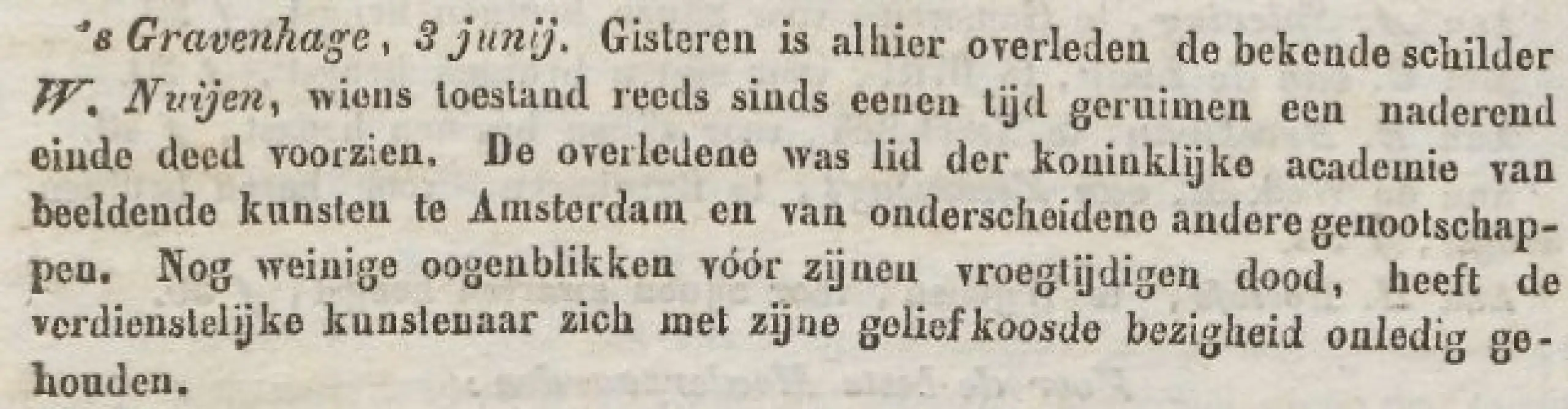
Death
The death certificate contrasts soberly with this:
Funeral
However little is known about Nuyen’s life, the course of his funeral is accurately described in the magazine ‘De Beeldende Kunsten’.
As the final tribute one could pay to the artist, people endeavored to participate in his solemn burial. A long line of deeply saddened people—of about a hundred names—follows the bier. The fringes of the shroud are carried by his two pupils Rochussen and Leickert, and further by the artists B.J. van Hove, Kruseman, Reijers, and Waldorp.
In the room where people gather for the funeral, a likeness of Nuyen can be seen, painted by Waldorp, ‘one of his most meritorious and loyal relatives’. After the ceremony, this is replaced by the strikingly lifelike portrait of the young artist who died prematurely by the Antwerp painter Nicaise de Keyser.
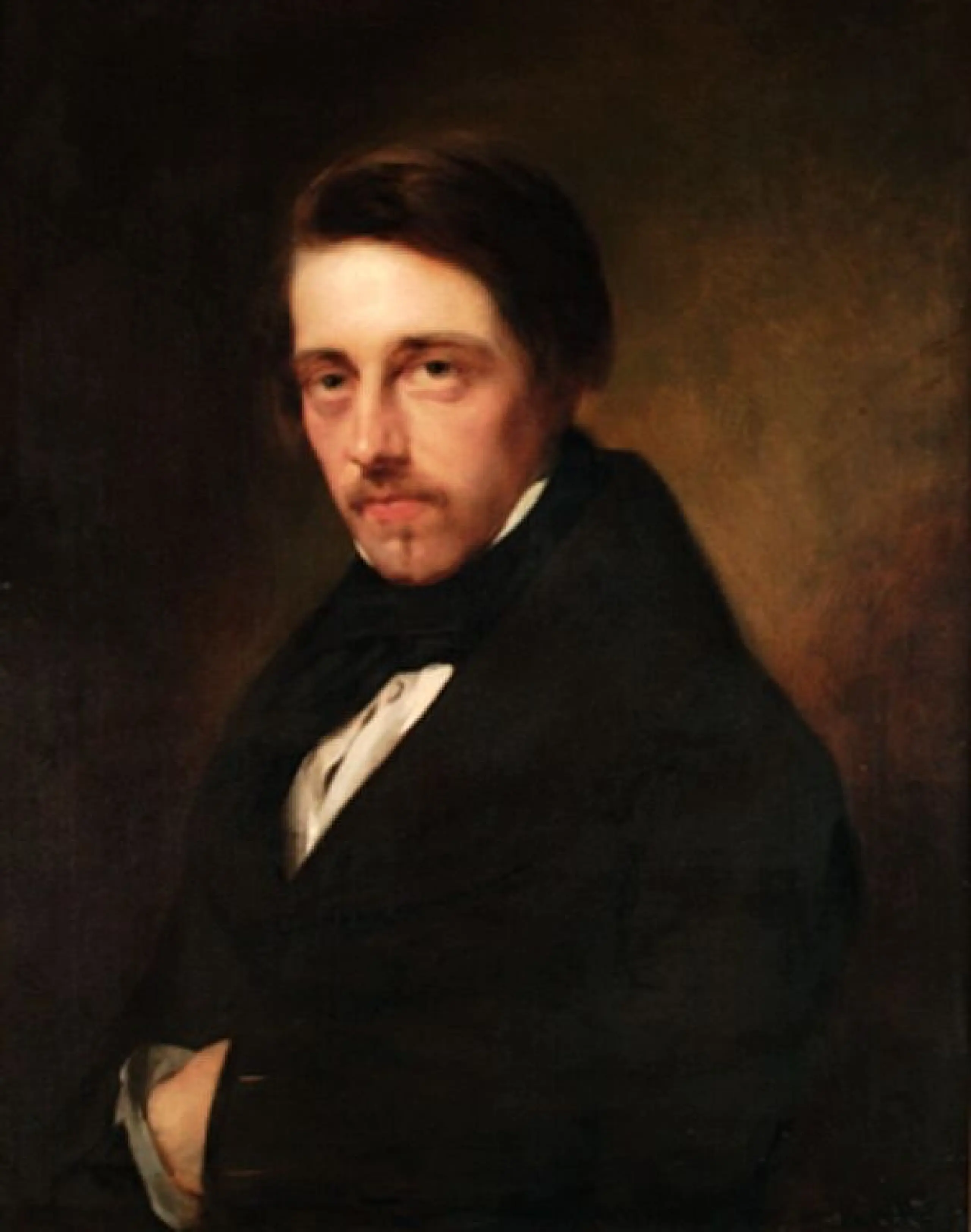
Nicaise de Keyser – portrait of W.J.J. Nuyen
about 1838 Oil on canvas – 78 x 61 cm
Signed: rear
Besides the funeral song, speeches delivered on this occasion have also been handed down to us. They speak of Nuyen’s life, ‘short in years but so entirely filled with glorious triumphs,’ and of his miraculous talent. He is called a great artist, a genius, and an outstanding painter. The word unforgettable is heard frequently.
The final speaker concludes his speech with the challenge: Fellow artists! Contemporaries of your departed friend… art, too, has a voice, which be heard by you: it asks for compensation, from your midst it asks for the development of a talent worthy of Nuyen… do not disappoint its expectation!
Shortly after his funeral in 1839, the art magazine of the time, ‘De Beeldende Kunsten,’ wrote in an extensive report on the ceremony: ‘If, in later times, the spirit of Romanticism, the contemplation of the French school, brought about a change of ideas in him, no one will be able to accuse him of allowing himself to be blinded by it; He possessed a sense for noticing the beauty in the strange.’ As proof of his rich imagination, reference was made to a magnificent painting depicting a shipwreck on a rocky beach with light breaking through the clouds. According to this magazine, it was an outstanding painting. The criticism of the young painter's work sounded more positive after his death than during his lifetime.
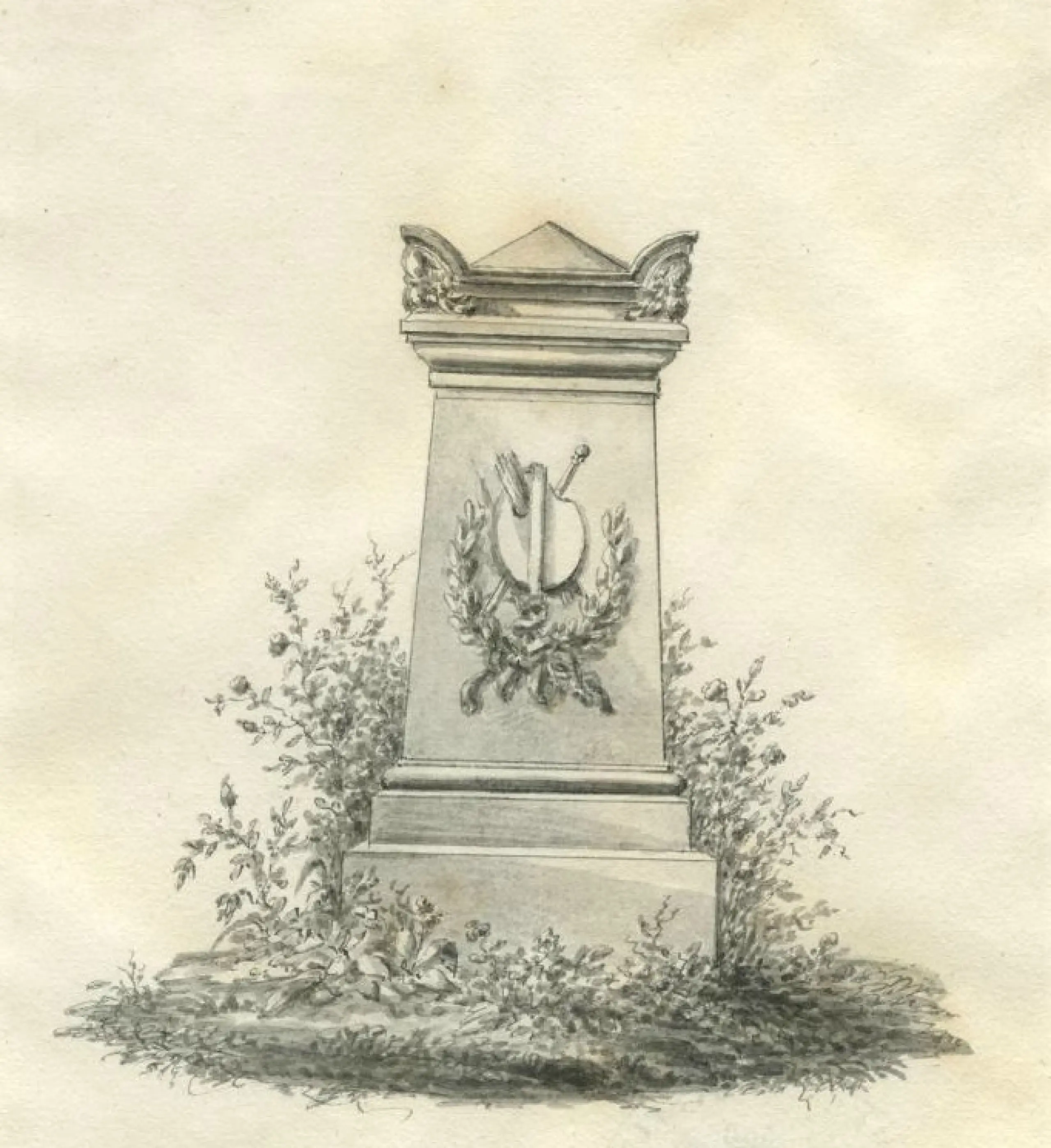
The grave monument (1842). A booklet has been published by Belinfante The Hague
‘Plegtige onthulling van het monument voor W.J.J. Nuyen op het Roomsch-Katholijk kerkhof te ’s Gravenhage. 22 juli 1842
Grave monument
A year later – June 1840 – a letter is sent to those who held Nuyen in high esteem as a friend or artist, signed by nine names including C. Kruseman, B.J. van Hove, C. Rochussen, and J. Bosboom. The purpose of the letter is to raise funds to ‘erect a simple obelisk for him, which will also be able to bear witness for posterity to how dear the artist was to his contemporaries.’
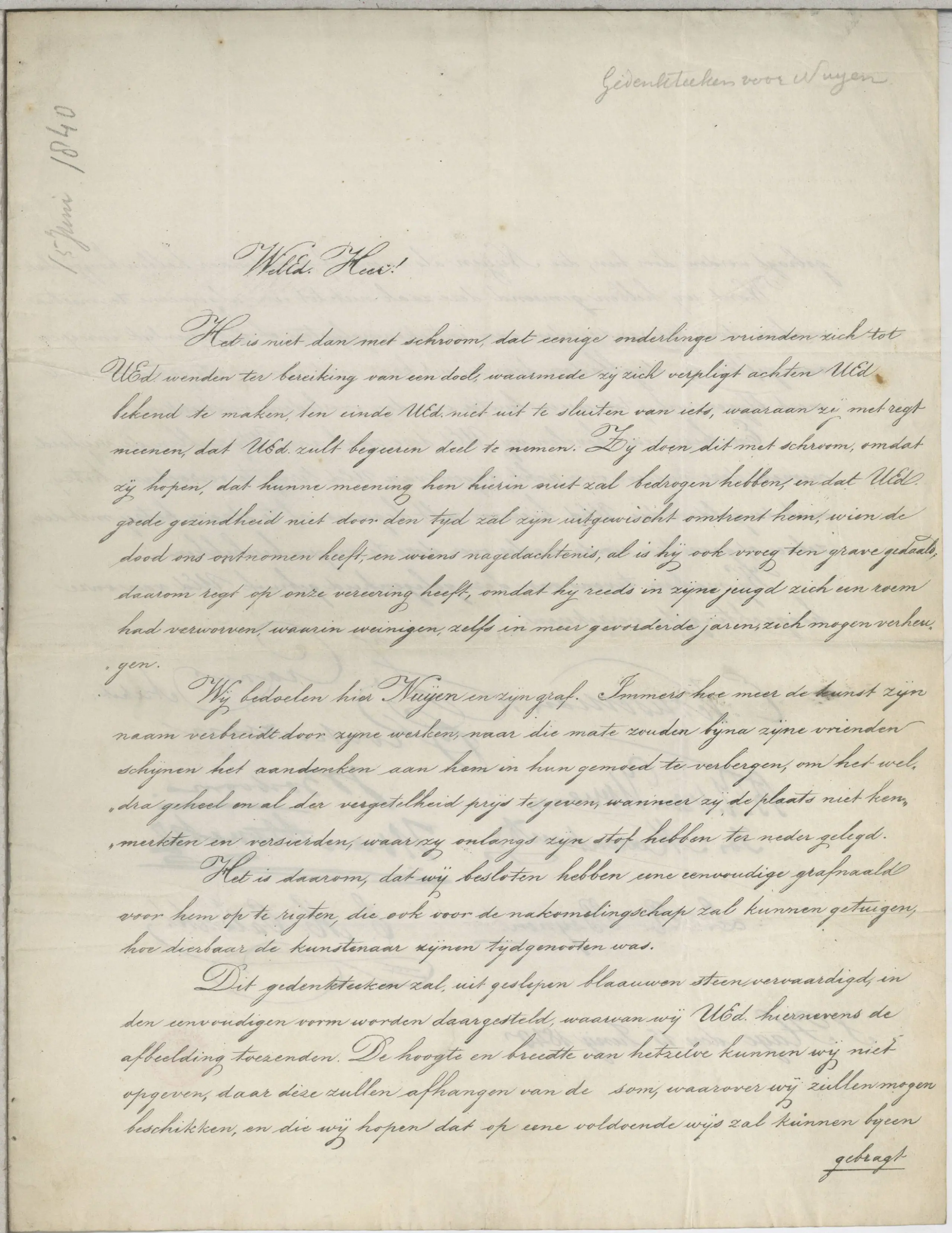
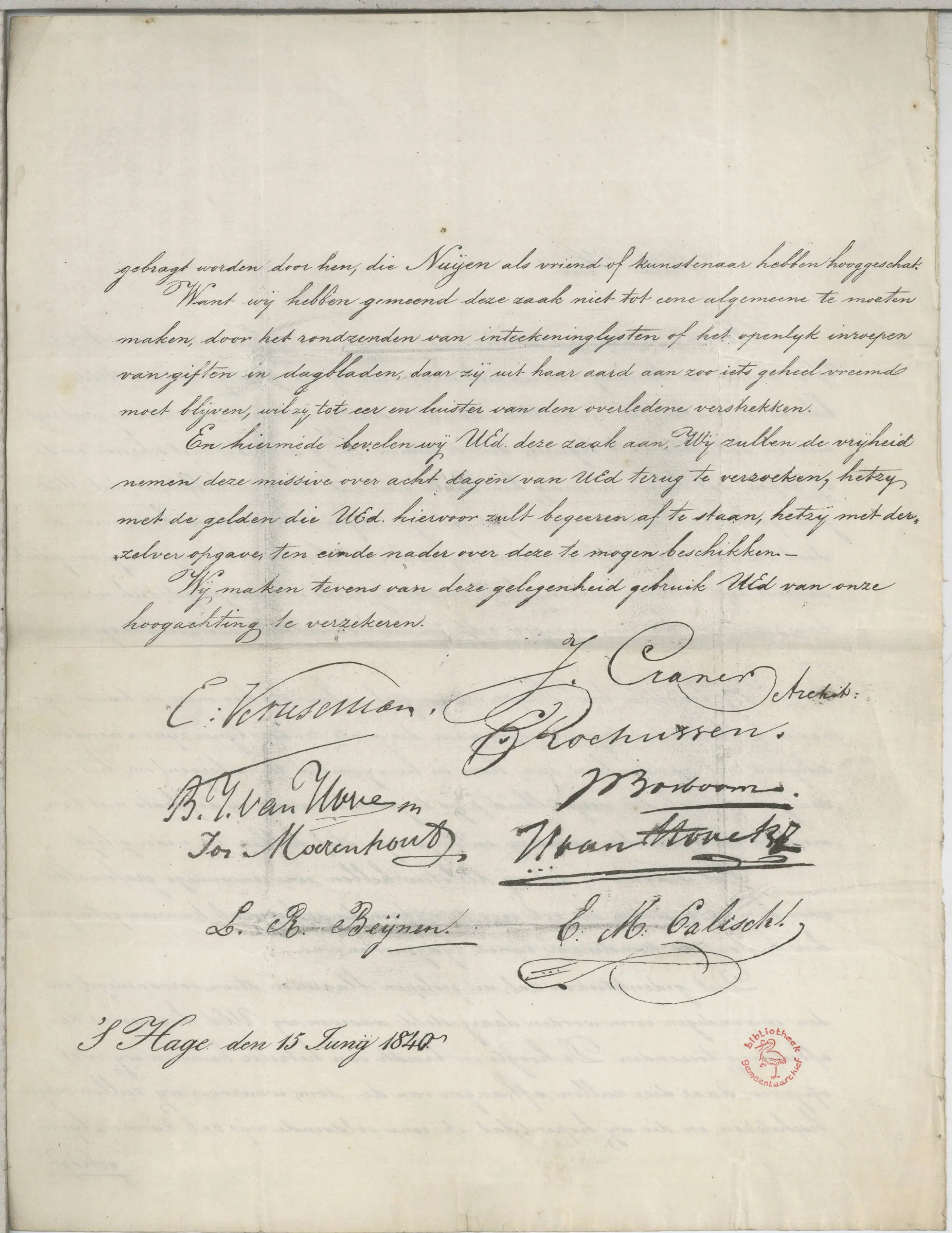
The invitation was followed up: on behalf of the ‘Committee for the Erection of a Monument to Nuyen’, Bosboom invited the subscribers to the solemn unveiling. This took place on July 22, 1842, at the churchyard (Roman Catholic Cemetery St. Petrus Banden, The Hague), where they had laid Nuyen to rest three years earlier. On the memorial, crafted from polished blue stone and placed on his grave, two lines of poetry were chiseled:
‘Geniality called Nuyen forth: he lived a short and great life. His dust rests in this grave, his name defies death’
Alas, Nuyen’s grave and the monument have not been preserved. Whether his name defied death is the question. Today, the ‘unforgettable Nuyen’ is no longer so well known.