
Wijnand Nuijen biography
Sources:
1) 2001 Wijnand Nuijen Young and disturbing genius from ‘Dutch Romanticism – painters of everyday life in the 19th century’ by Josephine Woldring
2) 1993 ‘Wijnand Nuyen and his friends’ by Henk Dinkelaar
3) 1977 ‘Wijnand Nuyen romantic works’ by John Sillevis
Young and Restless Genius of Romanticism
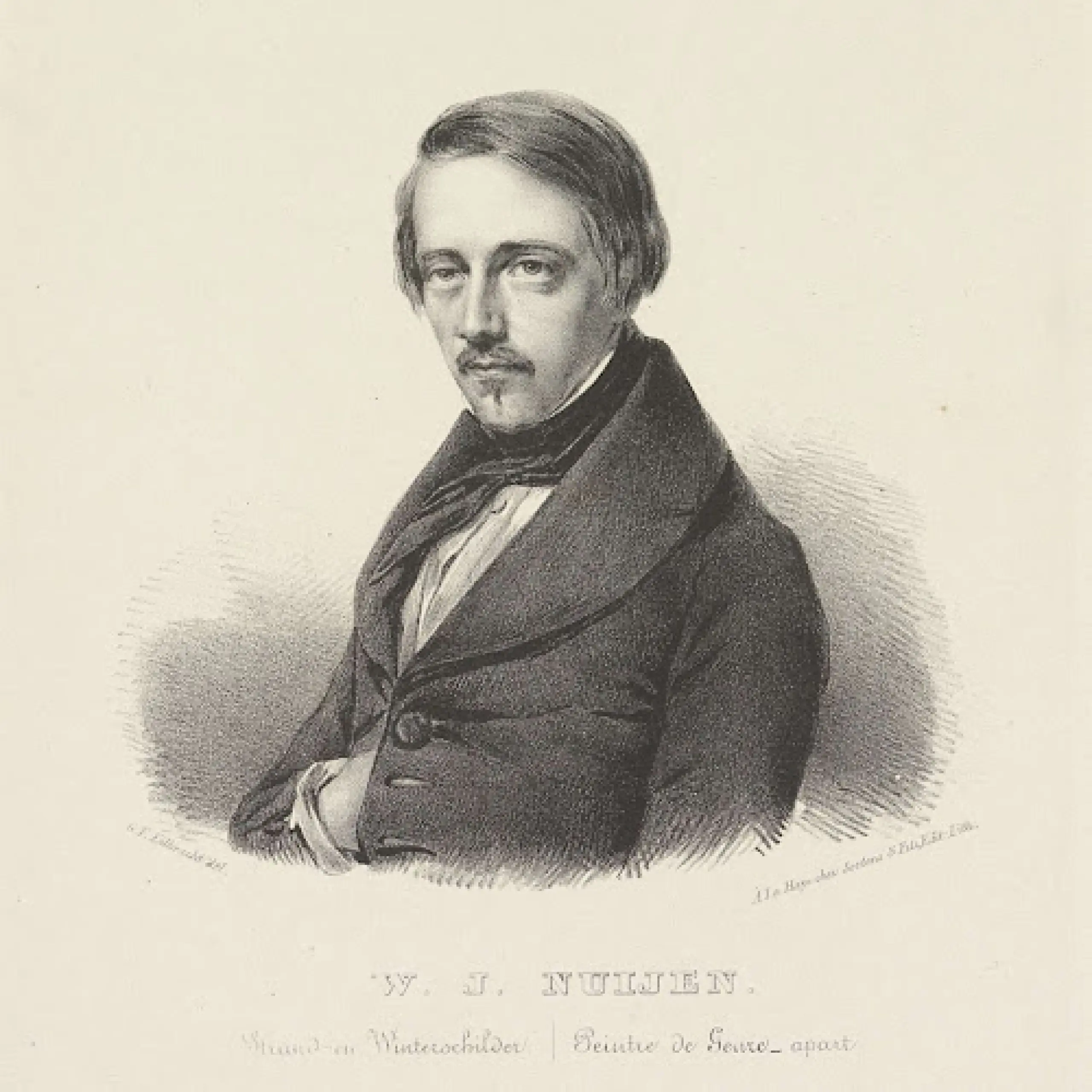
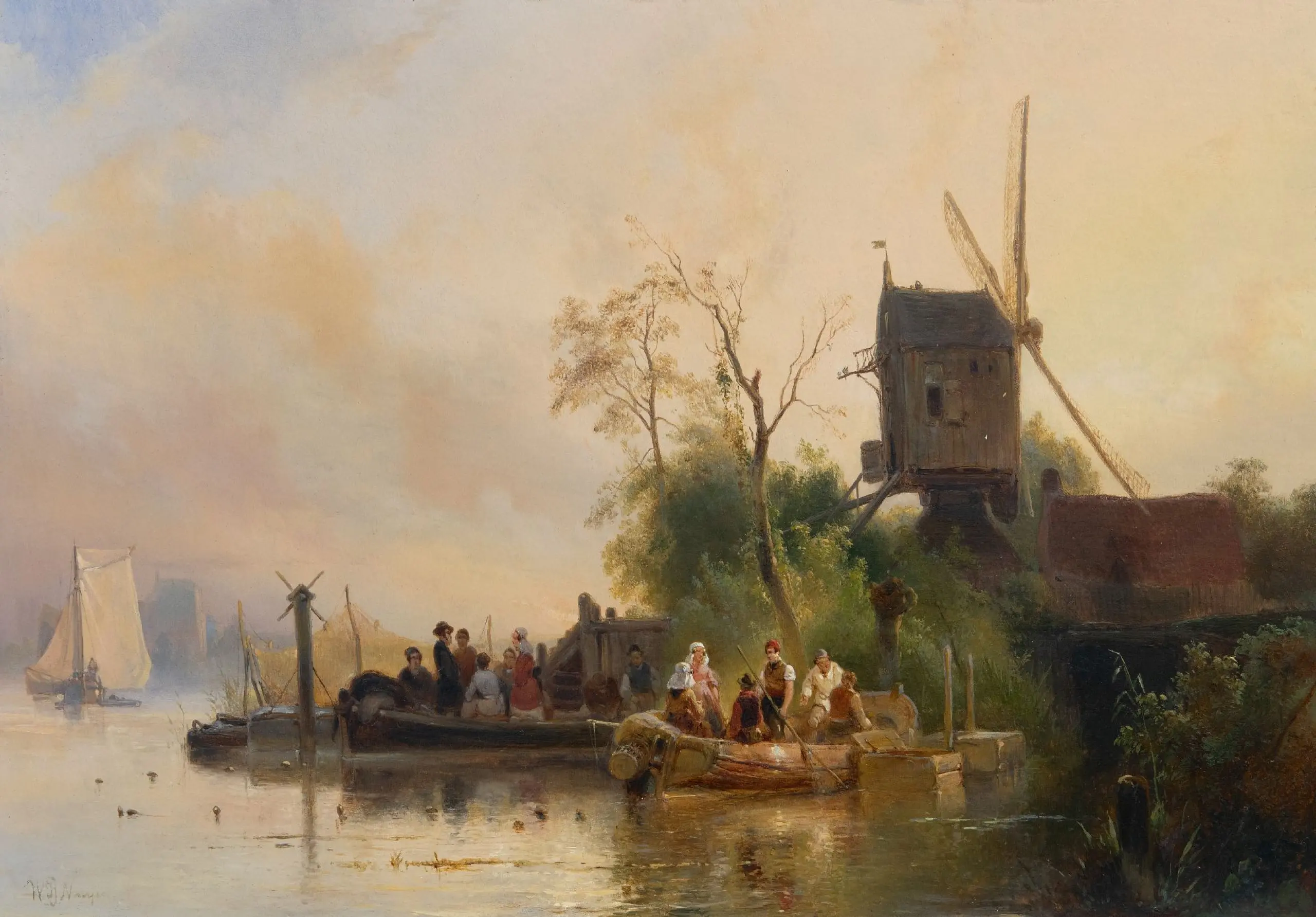
Wijnand Johannes Josephus Nuijen – the name is also spelled Nuyen – was a Master of Romanticism and a true young and restless genius. Born in The Hague on March 4, 1813, just before the end of the French occupation, Wijnand was the only son of the successful baker Bartholomeus Nuyen and Johanna Maria van Heijningen. It was expected that the young Wijnand would take over the thriving business on Derde Molstraat, but his parents recognized his exceptional drawing talents early on.
The Apprenticeship and First Successes
At the tender age of twelve, in 1825, Wijnand was given the opportunity to develop his talents. He apprenticed with the already prominent landscape painter Andreas Schelfhout. At the same time, he enrolled at the 's-Gravenhaagsche Teekenacademie (The Hague Drawing Academy), where he would study until 1829. Here, he received instruction from, among others, Bart van Hove, then head lecturer and known for his detailed stage sets for the Hague Theatre.
As early as the age of twelve, in 1825, Nuijen painted a large oil painting (1.56 meters high and 1.88 meters wide) of the flood that struck the Netherlands that year (see image). This work was likely inspired by illustrations by his teacher Schelfhout. The work was later purchased by Schelfhout himself at the auction of Nuijen's studio in 1839. The catalog described it as a 'masterful talent'.
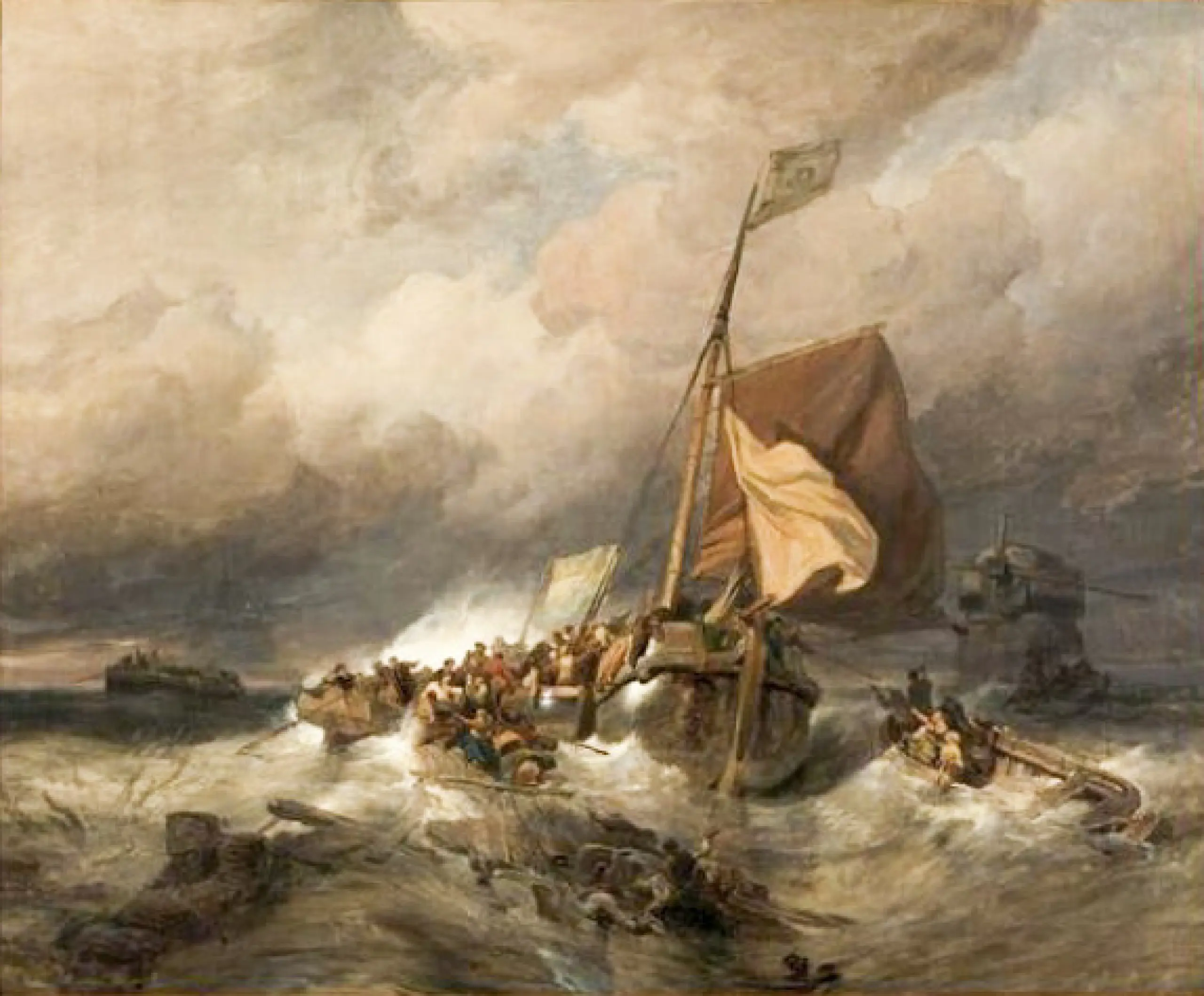
From 1829 onwards, Nuijen began participating in exhibitions and soon won prizes.
In 1829, he received an encouragement award in Ghent.
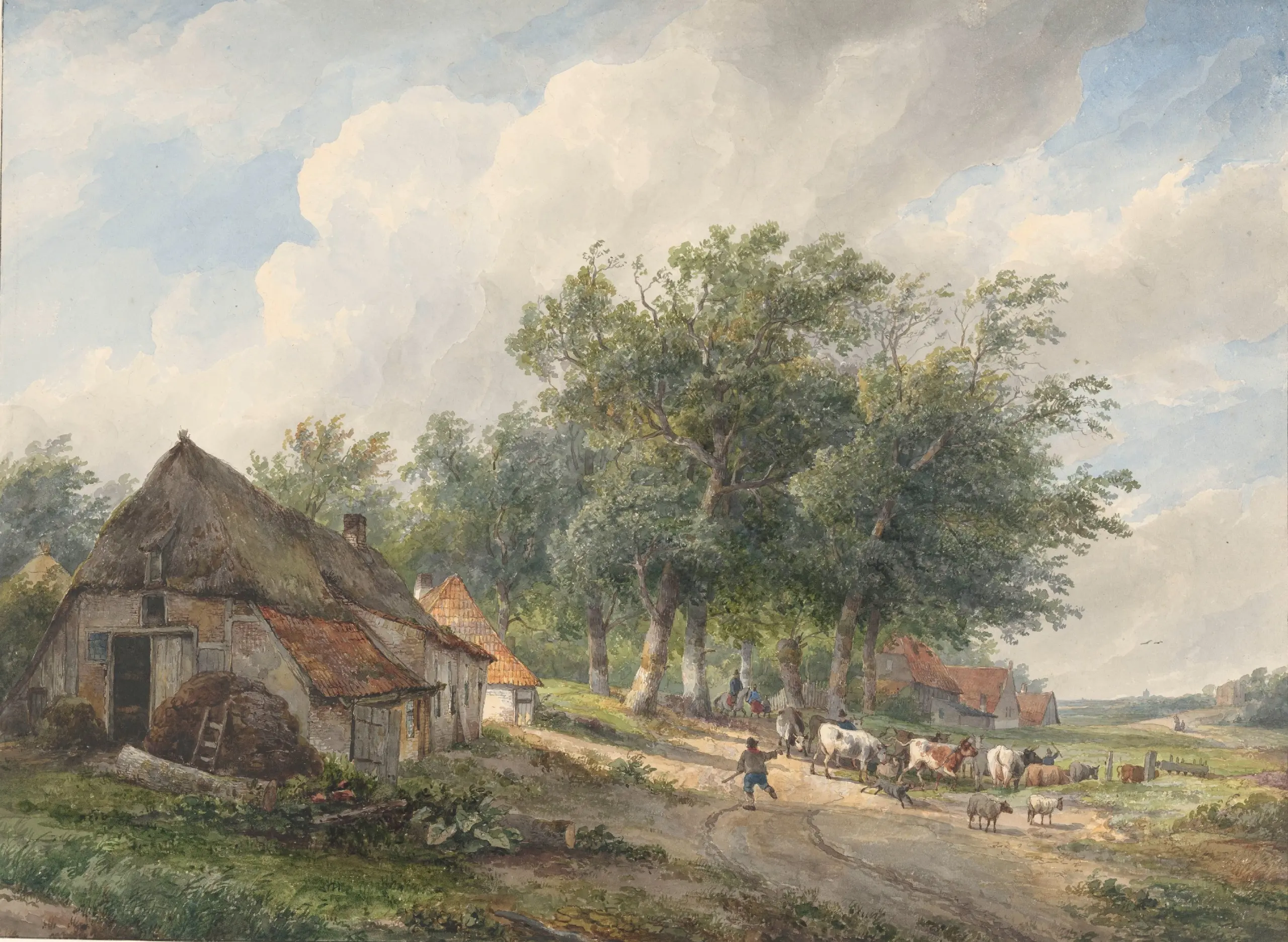
In that same year, he won a medal from the Amsterdam society Felix Meritis for a drawing of 'a landscape with a farmhouse and cattle in stormy weather'.
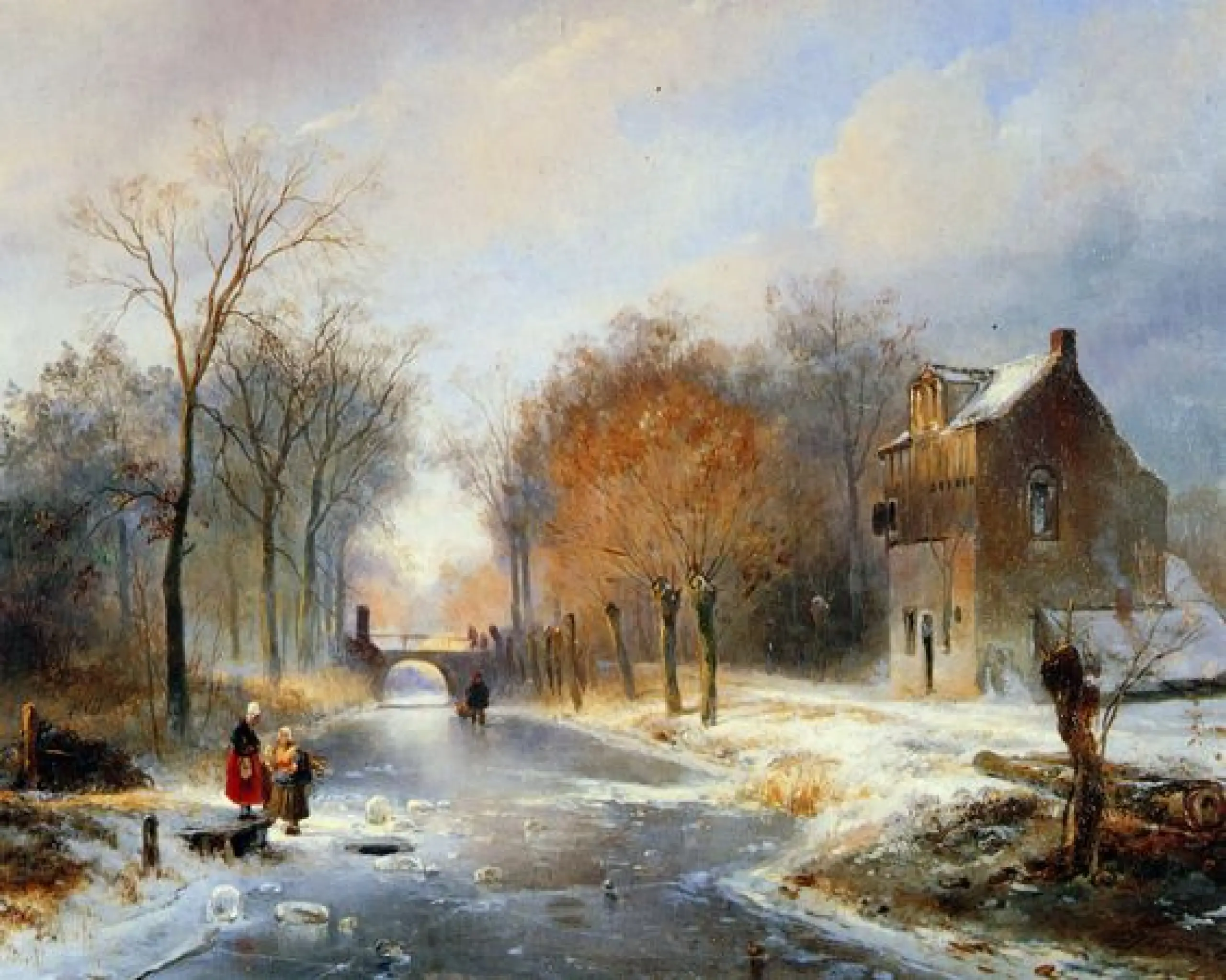
In 1830, he received another distinction from Felix Meritis, this time for a painted 'winter scene on the Van Vreedenburchweg in Rijswijk', an achievement accomplished at the age of 17.
In 1831, he received an honorary prize: a certificate and 15 ducats from the Minerva Academy of Fine Arts in Groningen for the oil painting 'A Rest at an Inn in the Seven Mountains'. Together with two other students from the Academy in The Hague, he was awarded the Grand National Medal.
The Breakthrough and French Influence
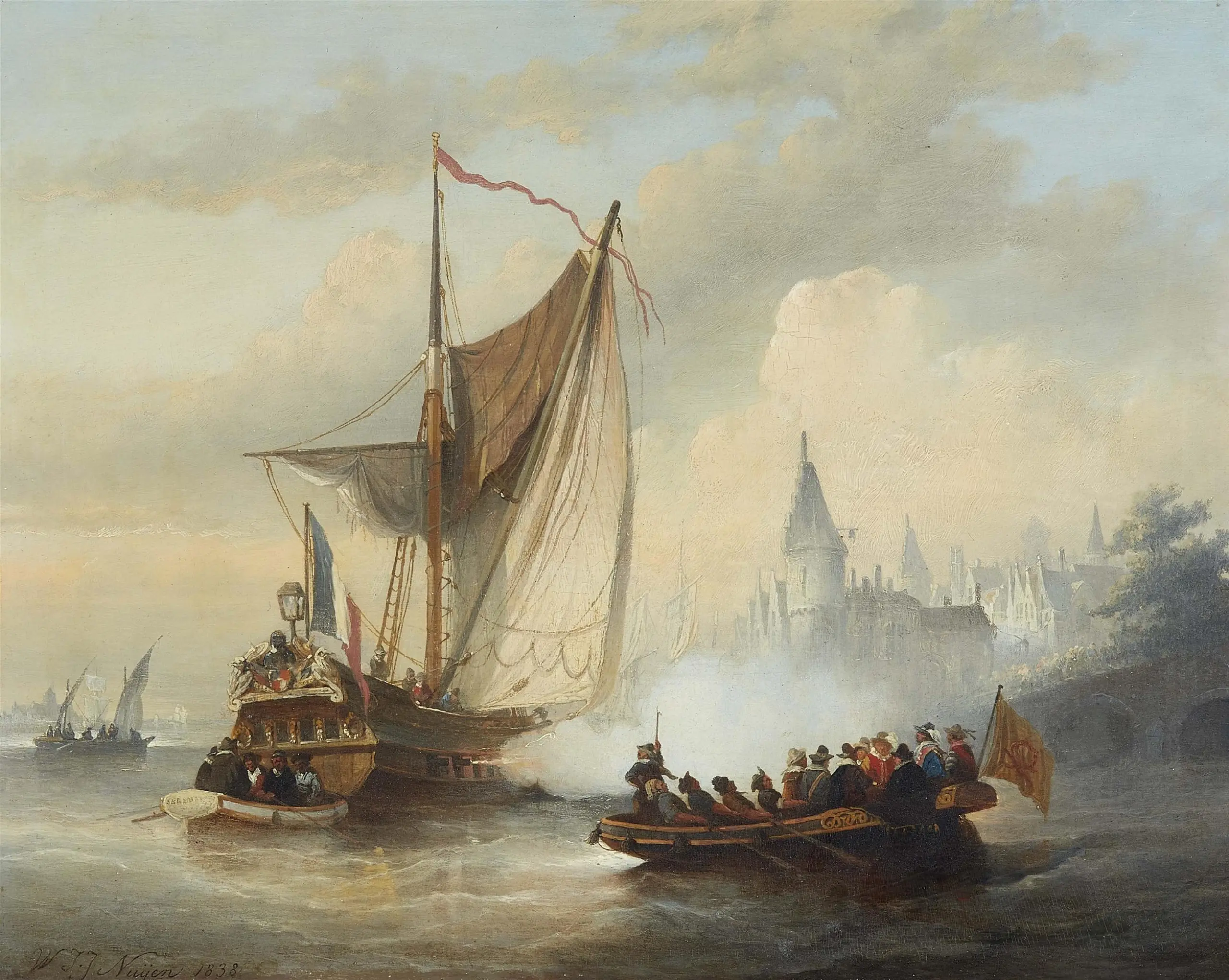
Nuijen continued to lead a restless existence and constantly sought new impulses. In 1833, he traveled to Paris with his friend Antonie Waldorp. This trip would have a decisive artistic influence on his development. In Paris, he visited leading museums and saw the work of French Romantic masters such as Gudin and Isabey. The confrontation with their savage shipwrecks, stormy coastal scenes, and the use of dramatic colors and sharp contrasts made a tremendous impression.
For Nuijen, Romanticism had become a world of fantasy, where nature was a source of deep emotional stirrings. After France, he traveled on to Germany and visited Munich. However, the North French coast remained a favorite theme for him.
Ruthless Criticism and Acknowledgment
Nuijen's new style, influenced by Romanticism, met with merciless resistance from Dutch art critics. They considered Romanticism an 'imported commodity' that threatened existing traditions. They feared that he was 'increasingly leaning towards the wrong Romantic taste' and 'preferred an easy effect without truth and naturalness'.
The critics could not categorize him: 'They are neither seascapes nor cityscapes; it is a genre a part'. Despite acknowledging his genius, they felt that he relied too heavily on his imagination.
Nevertheless, his work found a place in important collections, including that of the collector Colonel De Ceva and even that of King William II. In 1836, at the age of 23, he was elected a member of the Royal Academy of Visual Arts in Amsterdam.
The Early End
In 1838, he married Cornelia Johanna Schelfhout, the daughter of his teacher. Unfortunately, he was found to be seriously ill that same year; he suffered from tuberculosis. Despite his illness, he continued to work feverishly. The Belgian publicist and friend Felix Bogaerts described how Nuijen continued to paint despite severe pain.
Shortly before his death, his friend Waldorp rushed to his side. At his deathbed, Waldorp encouraged him by working in his presence. Nuijen could not resist the urge to 'put the finishing touches' on a beautiful painting that he hoped to complete before his death. Bogaerts described this as a 'last heroic effort by a genius who, even on the edge of the grave, was still working on immortality'.
Wijnand Nuijen died on June 2, 1839. At the auction of his studio shortly after his death, the list of oil paintings, drawings, and lithographs revealed just how prolific he was. The criticism of his work sounded more positive after his death. The artist was praised for his 'miraculous talent' and 'genius'. In his memory, a memorial was erected in 1842 at the Roman Catholic cemetery St. Petrus Banden in The Hague by friends, including C. Kruseman and J. Bosboom. It bore the lines of poetry: